
Snow removal reduces liability by eliminating hazardous conditions before they cause injury and by creating a documented record that proves your property was managed with reasonable care. For facility managers and business owners, understanding how snow removal reduces liability is the difference between a defensible position in court and a costly settlement. Slip-and-fall claims on commercial properties are among the most common sources of winter litigation, and courts evaluate whether you took timely, documented action. The strategies below give you the operational and legal framework to protect your property all season long.
What does snow removal liability mean for property owners?
Snow removal liability, formally known as premises liability in winter conditions, is the legal obligation property owners carry when snow or ice causes injury on their property. Courts apply a “duty of care” standard, meaning you must take reasonable steps to keep your property safe. Failing that standard opens you to negligence claims, which can result in significant legal costs.
Two legal concepts drive most winter injury claims:
- Natural accumulation: Snow or ice that falls and stays where it lands. In many states, property owners face limited liability for purely natural accumulation.
- Unnatural accumulation: Ice or snow that forms because of something you did, such as directing meltwater onto a walkway or piling snow where it refreezes into a pedestrian path. Courts hold property owners to a higher standard here.
- Duty of care variations by state: Some states require action within a reasonable time after a storm ends. Others impose liability the moment conditions become hazardous. Know your state’s standard before winter arrives.
- Slip-and-fall claim triggers: A claim typically requires proof that a hazard existed, that you knew or should have known about it, and that you failed to act. Documented maintenance directly counters the second and third elements.
- Insurance coverage gaps: Standard general liability policies frequently exclude snow removal exposures unless specifically endorsed. Verify your policy covers winter operations explicitly.
The liability picture is more complex than most facility managers expect. A single gap in coverage or a single undocumented storm event can shift full financial responsibility onto your organization.
How proper snow removal practices lower your risk

The most direct path to snow removal liability reduction is consistent, prioritized clearing of the areas where injuries actually happen. Slip-and-fall claims concentrate on high-traffic pedestrian walkways, building entrances, and ADA ramps. Those three zones deserve first attention after every storm event.
Follow this sequence for every winter weather event:
- Pre-treat before the storm. Apply ice melt or liquid de-icing product to walkways and ramps before precipitation begins. Pre-treatment prevents bonding between ice and pavement, making post-storm clearing faster and more complete.
- Clear pedestrian zones first. Prioritize building entrances, ADA ramps, and main walkways before parking lots. Foot traffic creates the highest injury frequency, and courts look at pedestrian zones first.
- Return during freeze-thaw cycles. A single clearing visit is rarely enough. Meltwater from afternoon sun refreezes overnight, creating black ice. Schedule return visits during extended weather events.
- Manage where you push snow. Piling snow against curbs or near drainage paths creates refreezing hazards. Improper snow placement can create higher liability than leaving snow untouched, because courts classify the resulting ice as unnatural accumulation.
- Document each service visit. Log the time, the areas cleared, the products applied, and the conditions observed. Photos with timestamps are the strongest form of evidence.
Pro Tip: Review your property map before the first storm of the season. Mark every ADA ramp, entrance, and drainage path. Share that map with your snow removal contractor so every visit follows the same priority order.
Courts evaluate conditions at the time of injury, not at the time of your last service visit. That fact means ongoing monitoring around the clock is a legal necessity, not just an operational preference. A documented winter maintenance plan that specifies monitoring schedules gives you a defensible position even when conditions change between service visits.
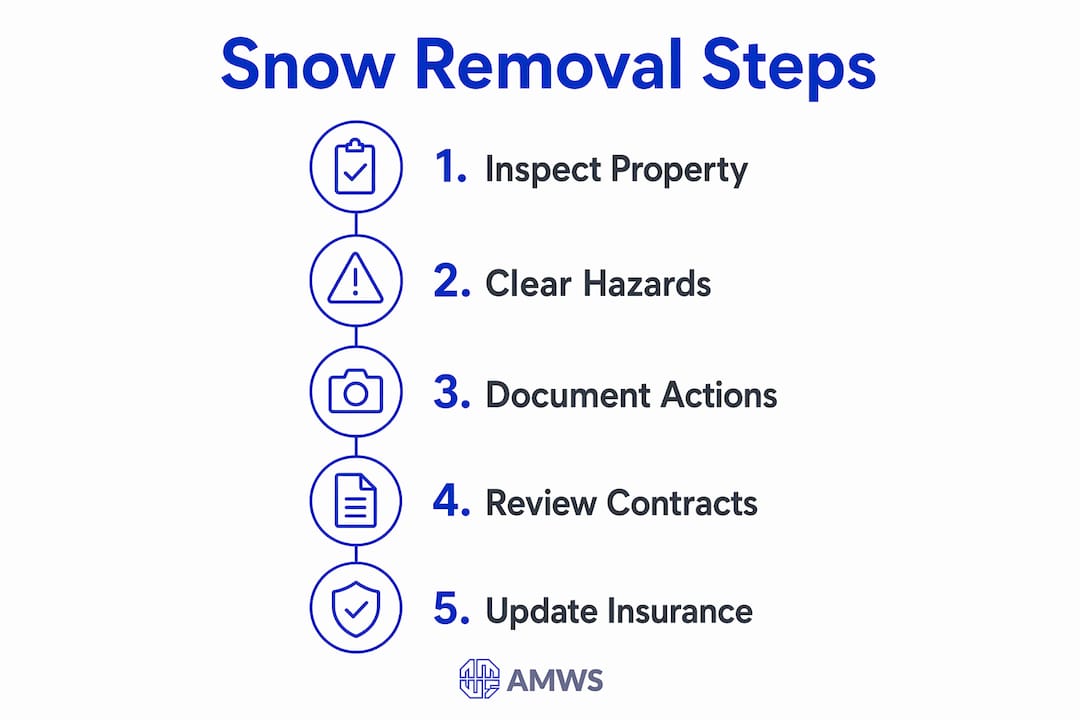
How contracts, insurance, and documentation reduce snow removal liability
A well-written contract is your first legal defense. A poorly written one can transfer liability back to you in ways you will not discover until a claim is filed. Snow removal liability risk reduction depends as much on paperwork as it does on plowing.
Contract clauses that protect you
Every commercial snow removal contract should include:
- Hold harmless and indemnification clauses: These shift liability for contractor negligence to the contractor, not your organization.
- Proof of insurance requirements: Require your contractor to carry commercial general liability and commercial auto coverage specific to snow operations. Cheap contracts often lack the necessary commercial auto and general liability coverage, which means a contractor’s vehicle accident on your lot becomes your problem.
- Defined service scope: Specify exactly which areas the contractor covers, including public sidewalks adjacent to your property. Partial clearing of a public sidewalk can create a new duty of care where none existed before.
- Response time requirements: Define how quickly the contractor must respond after snowfall thresholds are met.
Pro Tip: Review every snow removal contract before october ends. Waiting until the first storm to read the fine print is how facility managers discover coverage gaps at the worst possible moment.
Documentation standards that hold up in court
| Documentation type | What to record | Why it matters |
|---|---|---|
| Service logs | Time, date, areas cleared, products used | Proves timely response to hazardous conditions |
| Timestamped photos | Conditions before and after each visit | Visual evidence courts find compelling |
| Incident reports | Conditions at time of incident, witnesses, actions taken | Factual record that supports your defense |
| Weather records | Temperature, precipitation data for each event | Corroborates your service timing decisions |
Incident reports must be factual and unaltered. Incomplete or altered reports damage your legal defense more than an honest mistake does. Record conditions immediately, preserve all notes, and never revise a report after the fact.
Many property owners assume their general liability policy covers all snow-related claims. Specific policy endorsements and contract reviews are required to close that gap. Confirm coverage in writing with your insurer before the season starts.
Common liability pitfalls in snow removal operations
Knowing how snow clearance lowers risk is only half the equation. The other half is knowing which mistakes create new exposure. The following errors appear repeatedly in winter liability claims against commercial properties:
- Incomplete clearing. Clearing 80% of a walkway and leaving a patch of ice at the entrance is worse than clearing nothing. Courts view partial effort as evidence that you knew the hazard existed and failed to address it fully.
- Clearing public sidewalks without authority. If your property does not include the adjacent public sidewalk, clearing it voluntarily can establish a duty of care you did not previously have. Review your property easements before authorizing any work on public right-of-way.
- Pushing snow to dangerous locations. Snow piled near fire exits, at the base of ramps, or across sightlines in parking lots creates secondary hazards. Blocked sightlines lead to vehicle-pedestrian conflicts, and refreezing piles create slip hazards days after the original storm.
- Delayed incident reporting. Slip-and-fall liability claims require timely reporting because some jurisdictions have compressed notice windows. Waiting to report an incident to your insurer shrinks your legal options.
- Altering post-incident records. Cleaning up an area before photographing it, or revising a service log after an injury occurs, destroys your credibility in court. Preserve the scene and document conditions exactly as they were.
The pattern across these pitfalls is the same: action taken without a plan creates more exposure than a well-documented, consistent program. Snow management and liability are directly connected. Discipline in operations translates directly into a stronger legal defense.
Key Takeaways
Consistent, documented snow removal is the single most effective way to reduce slip-and-fall liability on commercial property during winter.
| Point | Details |
|---|---|
| Prioritize pedestrian zones | Clear walkways, entrances, and ADA ramps first after every storm event. |
| Avoid unnatural accumulation | Never push snow to locations where it will refreeze into pedestrian or vehicle paths. |
| Verify contract coverage | Require contractors to carry commercial general liability and commercial auto insurance specific to snow operations. |
| Document every service visit | Log times, areas cleared, products used, and conditions with timestamped photos. |
| Report incidents immediately | Notify your insurer promptly after any incident to preserve your legal options. |
Why I think most facilities are one bad storm away from a serious claim
I have spent years watching facility managers treat snow removal as a seasonal nuisance rather than a legal obligation. The pattern is consistent: a property gets through several mild winters without incident, the team grows complacent, the contract does not get reviewed, and then a single freeze-thaw cycle in january produces a claim that costs far more than a full season of professional service would have.
The uncomfortable truth about snow removal liability is that the legal system does not grade on effort. A court does not care that your crew worked through the night if you cannot prove it with logs, photos, and a signed service record. Good intentions without documentation are legally worthless.
What I have seen work is treating snow removal the same way a compliance team treats a regulatory audit. You build a checklist, you assign accountability, and you verify the record before the season starts. That means reviewing contracts in october, confirming insurance endorsements, and walking the property to identify drainage paths that will become ice hazards. Facilities that do this work consistently are the ones that defend claims successfully, or avoid them entirely.
The cost of discipline is low. The cost of a single undefended slip-and-fall claim is not. That math should drive every decision you make about winter maintenance.
— MOHAMED AWAD
AMWS Group’s approach to commercial snow removal liability
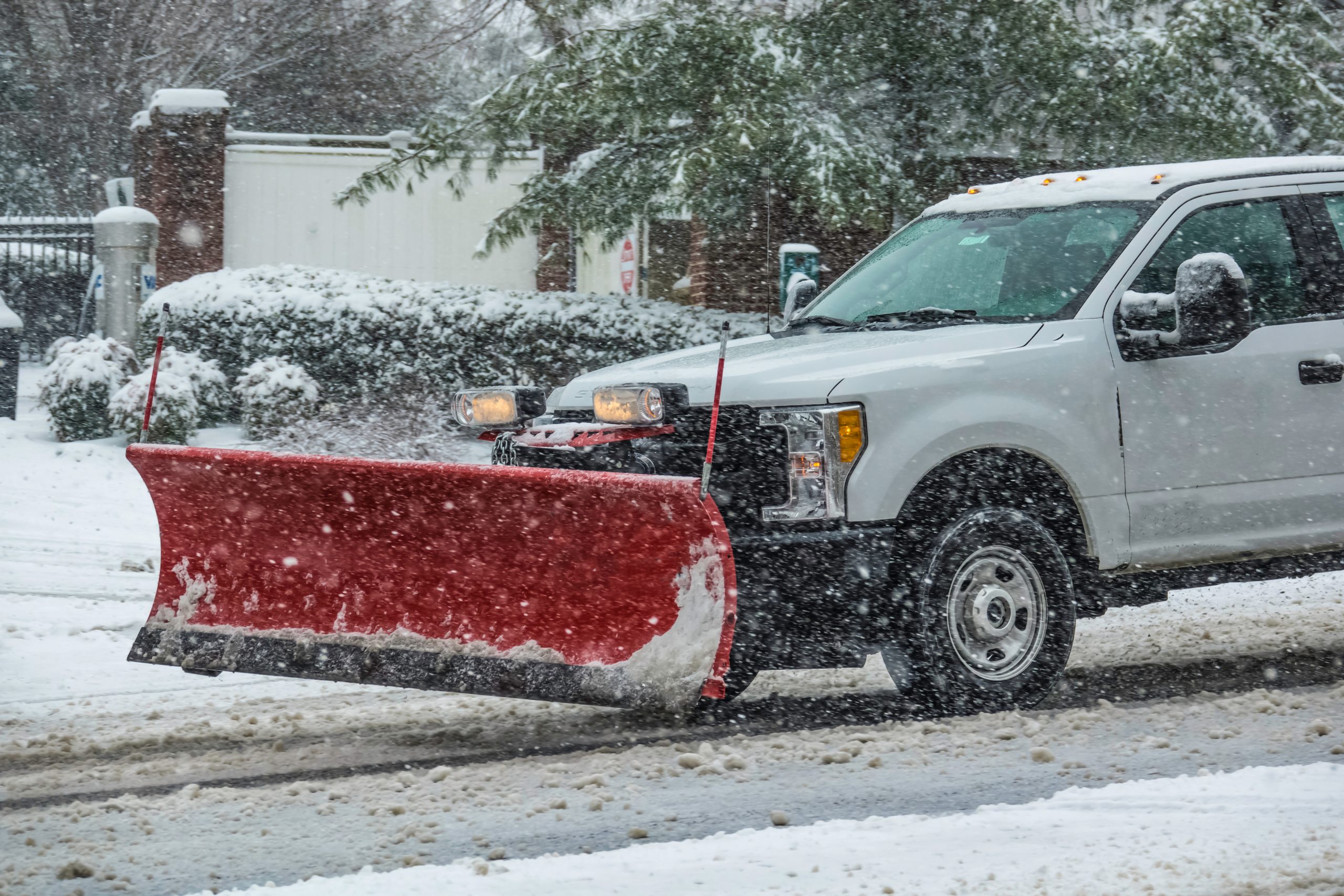
AMWS Group delivers commercial snow plowing and de-icing services built around the legal and operational standards that protect your property. Every service visit includes documented logs, timestamped records, and priority clearing of pedestrian zones, entrances, and ADA ramps. Contracts are written with clear scope definitions, insurance compliance requirements, and response time commitments. AMWS Group’s commercial property maintenance programs give facility managers a single, accountable partner for winter safety and year-round risk reduction. If your current snow removal program has gaps in documentation or contract coverage, AMWS Group can close them before the next storm arrives.
FAQ
What is snow removal liability?
Snow removal liability is the legal responsibility property owners carry when snow or ice on their property causes injury. Courts apply a duty of care standard and evaluate whether the owner took reasonable, timely steps to address hazardous conditions.
Does general liability insurance cover snow removal claims?
Standard general liability policies frequently exclude snow removal exposures unless a specific endorsement is added. Confirm your policy covers winter operations in writing before the season begins.
What is unnatural accumulation and why does it matter?
Unnatural accumulation is snow or ice that forms because of something a property owner or contractor did, such as pushing snow onto a drainage path where it refreezes. Courts hold property owners to a higher liability standard for unnatural accumulation than for natural snowfall.
How does documentation reduce liability after a slip-and-fall incident?
Factual, unaltered records of service times, conditions, and actions taken give your legal team evidence that you met your duty of care. Altered or incomplete records damage your defense more than the incident itself.
When should I review my snow removal contract?
Review your snow removal contract before the winter season starts, ideally in october. Waiting until a storm arrives to check contract scope, insurance requirements, and service area definitions leaves no time to correct gaps.